How to Take a Taxi in Korea: Apps, Fares & Useful Phrases
Travel Korean · Taxi Guide
How to Take a Taxi in Korea: Apps, Fares & Useful Phrases
Learn how to book or hail a licensed taxi, choose a traveler-friendly app, confirm payment, understand fare differences, and communicate your destination.
Quick Answer
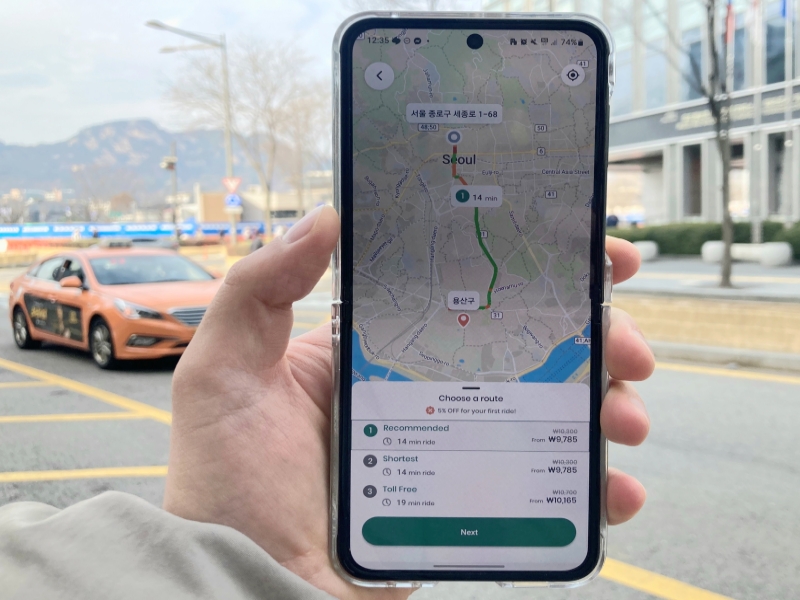
The easiest method for many international visitors is to use a taxi app such as k.ride, Kakao T, or Uber, depending on the city and your account setup. Enter the exact destination, check the license plate before boarding, and confirm whether payment is handled in the app or directly with the driver. For a street taxi, look for 빈차, show the Korean address on your phone, and make sure the meter is running. Fares, surcharges, vehicle types, and payment support vary by region and service.
Explore More Korean
Read Taxi and “Please Go” in Korean
택시 — Taxi
Romanization: taek-si
taek
ㅌ + ㅐ + ㄱ
si
ㅅ + ㅣ
[장소](으)로 가 주세요 — Please go to [place]
Romanization: [place]-(eu)-ro ga ju-se-yo
Example: 서울역으로 가 주세요. — Please go to Seoul Station.
ga · ㄱ+ㅏ
ju · ㅈ+ㅜ
se · ㅅ+ㅔ
yo · ㅇ+ㅛ
Which Taxi App Should Travelers Use in Korea?
| App | Why a Traveler May Choose It | What to Confirm |
|---|---|---|
| k.ride | Designed for international travelers, with multilingual destination search, translated driver chat, and supported overseas payment methods. | Whether the service and your preferred payment method are available in your location. |
| Kakao T | Widely used locally and useful if you already have or can create the required Kakao account. | Account requirements and whether your selected ride uses app payment or direct payment to the driver. |
| Uber | Familiar interface for existing Uber users and available taxi products in many Korean cities. | Local product availability, estimated fare, service fee, and payment option. |
- Set your pickup pin carefully: Large stations and malls may have several taxi zones.
- Enter the exact destination: A Korean road-name address or place listing is more reliable than an English nickname.
- Review the product and payment: Confirm standard, deluxe, jumbo, or other options before requesting.
- Match the vehicle: Check the license plate in the app before entering.
Taxi Types and Availability Signs
Vehicle colors differ by city and operator, so identify the service label and app category instead of relying only on paint color.
| Taxi Type | Korean | Typical Use | Before Booking |
|---|---|---|---|
| Standard taxi | 일반택시 | Ordinary city travel for small groups and normal luggage. | Check the meter, regional fare, and surcharge notice. |
| Deluxe taxi | 모범택시 | A larger or more premium sedan service with a higher fare structure. | Compare the displayed estimate with a standard taxi. |
| Jumbo taxi | 대형택시 | Groups or passengers with extra luggage. | Confirm passenger and luggage capacity for the exact vehicle. |
| International taxi | 인터내셔널택시 | A Seoul service aimed at international passengers, with language support. | Check the applicable passenger surcharge or airport section fare. |
Useful windshield signs
빈차 means available or vacant. 예약 means reserved. Sign color and placement can vary, so read the Korean word rather than depending on a specific LED color.
Taxi Fares, Surcharges, Payment & Tipping
- Metered fares: Standard taxis generally use a meter, but base fares and distance/time increments vary by city.
- Surcharges: Late-night, outside-city, call, airport, or international-service surcharges may apply. Review the app estimate and posted notice.
- Cards: Credit-card payment is common, but an overseas card can still fail because of the card, network, or terminal. Carry a backup payment method.
- Transportation cards: Tmoney may work at compatible taxi terminals when the stored balance covers the fare.
- Cash: Korean won remains a useful backup; smaller notes are easier for short trips.
- Tipping: A tip is generally not expected. Pay the displayed or confirmed fare unless you voluntarily choose otherwise.
Useful Korean Taxi Phrases
| Meaning | Korean | Romanization | Use |
|---|---|---|---|
| Please go to [place]. | [장소](으)로 가 주세요. | [place]-(eu)-ro ga ju-se-yo. | State the destination or show it on your phone. |
| Please go to this address. | 이 주소로 가 주세요. | i ju-so-ro ga ju-se-yo. | Show a full Korean road-name address. |
| Please drop me off here. | 여기서 내려 주세요. | yeo-gi-seo nae-ryeo ju-se-yo. | Use when you see a safe stopping point near the destination. |
| Can I pay by card? | 카드 돼요? | ka-deu dwae-yo? | Confirm before payment if you are unsure. |
| Please give me a receipt. | 영수증 주세요. | yeong-su-jeung ju-se-yo. | Keep it in case of a fare question or lost item. |
| Please use the meter. | 미터기 켜 주세요. | mi-teo-gi kyeo ju-se-yo. | Useful for a street-hailed metered taxi. |
Real-Life Taxi Dialogues
Dialogue 1: Entering a Street Taxi
여행자: 안녕하세요. 서울역으로 가 주세요.
Hello. Please go to Seoul Station.
기사님: 네, 알겠습니다.
Yes, understood.
Dialogue 2: Confirming the Address
기사님: 여기 맞아요?
Is this the right place?
여행자: 네, 맞아요. 여기서 내려 주세요.
Yes, that’s right. Please drop me off here.
Dialogue 3: Paying and Requesting a Receipt
기사님: 만 원입니다.
It is 10,000 won.
여행자: 카드로 결제할게요. 영수증도 주세요.
I’ll pay by card. Please give me a receipt too.
Taxi Safety, Receipts & Lost Items
- Use a licensed taxi stand or recognized app, particularly late at night or at an airport.
- Match the license plate and vehicle details before entering an app-dispatched taxi.
- Share the trip details with a trusted person when traveling alone.
- Keep the app trip record or paper receipt. It may show trip times, fare and surcharge information, and taxi identification details.
- If an item is lost, start with the app’s lost-item function or the contact/reporting information on the receipt.
- Check that payment was not already completed in the app before paying the driver directly.
Practice Challenge
Click each question to reveal the answer.
1. What does 빈차 mean?
Answer: Vacant or available—the taxi can accept a passenger.
2. Which app is specifically designed for international travelers?
Answer: k.ride, although availability and supported payments should still be confirmed.
3. How do you say “Please drop me off here”?
Answer: 여기서 내려 주세요.
4. Is tipping a Korean taxi driver required?
Answer: No. A tip is generally not expected.
5. What should you check before entering an app-dispatched taxi?
Answer: Match the license plate and vehicle details shown in the app.
Frequently Asked Questions
Do Korean taxi drivers speak English?
Language ability varies. Use an app with the destination already entered or show the full address in Korean. Translation chat is available in some traveler-focused apps.
What should I do if I leave something in a taxi?
Use the app’s trip history or lost-item support. If you hailed the taxi, keep the receipt and use its taxi identification and reporting information.
Do Korean taxis charge extra at night?
Many do, but the hours and percentage depend on the city, taxi class, and service. Check the app estimate, meter notice, or official regional fare table.
Can I pay a Korean taxi with Tmoney?
Tmoney can be used at compatible taxi terminals if the stored balance covers the total fare. Keep another payment option available.
How do I hail a taxi on the street?
Stand at a safe legal pickup point, look for the 빈차 sign, and raise your hand clearly. Avoid bus stops, crosswalks, and locations where stopping would be unsafe.
Guide Summary
Taking a taxi in Korea is easiest when you enter the destination in an app, check the assigned vehicle, understand whether payment is automatic or direct, and keep a receipt or digital trip record. Learn a small set of phrases—especially 가 주세요, 내려 주세요, 카드 돼요?, and 영수증 주세요—and verify regional fares or surcharges before longer trips.
