Korean Gestures and Body Language: What Travelers Should Know
Korean Culture · Travel Etiquette
Korean Gestures and Body Language: What Travelers Should Know
Learn when to bow, how to give and receive objects politely, which hand gestures to avoid, and what to say during everyday interactions in South Korea.
Quick Answer
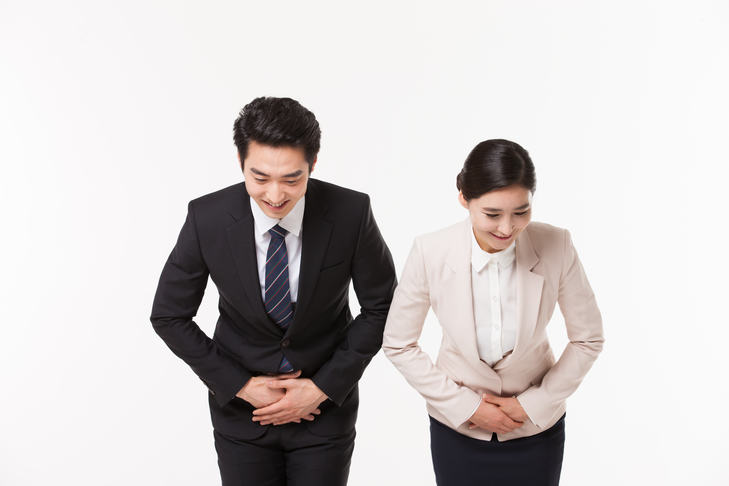
Travelers do not need to memorize exact bowing angles. A small nod or light bow works for most greetings and thanks, while a more deliberate bow suits formal introductions or sincere apologies. Use two hands when giving an important item to an elder or in a formal interaction, beckon with the palm facing down, and pair gestures with polite phrases such as 안녕하세요, 감사합니다, and 죄송합니다. Context matters more than performing every gesture perfectly.
Explore More Korean
Greetings: Pair the Gesture with Korean
A gesture becomes clearer when it is paired with a simple phrase. These two expressions cover many everyday situations.
안녕하세요 — Hello
Romanization: an-nyeong-ha-se-yo
Gesture: Add a small nod or light bow when greeting someone politely.
an · ㅇ+ㅏ+ㄴ
nyeong · ㄴ+ㅕ+ㅇ
ha · ㅎ+ㅏ
se · ㅅ+ㅔ
yo · ㅇ+ㅛ
감사합니다 — Thank you
Romanization: gam-sa-ham-ni-da
Gesture: A brief nod or light bow makes the thanks feel more attentive. In a formal exchange, keep your hands visible and receive the item carefully.
gam · ㄱ+ㅏ+ㅁ
sa · ㅅ+ㅏ
hap · ㅎ+ㅏ+ㅂ
ni · ㄴ+ㅣ
da · ㄷ+ㅏ
Essential Korean Gestures for Travelers
| Gesture | What It Communicates | When Travelers May Use It |
|---|---|---|
| Small nod or light bow | A polite greeting, thanks, or acknowledgment. | Greeting hotel staff, entering a small shop, thanking someone, or saying goodbye. |
| More deliberate bow | Greater formality, respect, gratitude, or apology. | A formal introduction, meeting an elder in a respectful setting, or making a sincere apology. |
| Two-hand exchange | Care and respect toward the receiver. | Giving or receiving a business card, gift, document, drink, or important object. |
| Palm-down beckoning | Invites someone to come closer without using an upward finger curl. | Getting a companion’s attention. For taxis, a clear raised hand is usually easier to understand. |
| Finger heart 손가락 하트 | Friendly affection or appreciation in a casual, playful context. | Photos, entertainment events, or relaxed interactions—not formal business etiquette. |
Body-Language Mistakes to Avoid in Korea
Mistake 1: Curling one finger upward to call someone.
This can feel rude or be associated with calling an animal. Use an open hand with the palm down instead.
Mistake 2: Treating the two-hand rule as mandatory in every transaction.
Two hands are especially useful with elders or in formal exchanges. A routine convenience-store payment does not require a ceremony; follow the staff’s pace and use the card or cash tray when provided.
Mistake 3: Writing a person’s name in red ink.
This remains a well-known cultural taboo or superstition. Use black or blue ink for names, cards, and labels.
Mistake 4: Avoiding all eye contact.
You do not need to keep your eyes lowered. Natural eye contact is appropriate; simply avoid prolonged staring, particularly in a tense or highly formal interaction.
Mistake 5: Assuming physical contact is universally welcome.
Hugs, shoulder pats, and casual touching depend on familiarity. Give new acquaintances comfortable personal space.
Useful Korean Vocabulary for Polite Interactions
| Meaning | Korean | Romanization | Use |
|---|---|---|---|
| Greeting / bow | 인사 | in-sa | A general word for greeting; it can include bowing. |
| Respect | 존중 / 존경 | jon-jung / jon-gyeong | 존중 is respect or consideration; 존경 is admiration or high regard. |
| Excuse me | 실례합니다 | sil-lye-ham-ni-da | A polite way to approach someone or interrupt briefly. |
| Just a moment / Let me pass | 잠시만요 | jam-si-man-yo | Useful when moving through a crowd or asking someone to wait. |
| I’m sorry | 죄송합니다 | joe-song-ham-ni-da | Pair it with a light bow after a mistake or inconvenience. |
| Welcome | 어서 오세요 | eo-seo o-se-yo | A phrase travelers commonly hear when entering a shop or restaurant. |
Real-Life Travel Scenarios
Scenario 1: Paying at a Market
직원: 계산해 드릴게요.
I’ll ring this up for you.
여행자: (Offers the card with two hands or one hand supported.) 감사합니다.
Thank you.
Scenario 2: Asking for Directions
여행자: (Makes brief eye contact and gives a small nod.) 실례합니다. 지하철역이 어디예요?
Excuse me. Where is the subway station?
현지인: 저쪽으로 쭉 가세요.
Go straight that way.
Scenario 3: Moving Through a Crowd
여행자: 잠시만요. 지나갈게요.
Excuse me. I’m going to pass through.
상대방: 네.
Okay.
Practice Challenge
Click each question to reveal the answer.
1. How should you beckon someone in Korea?
Answer: Use an open hand with the palm facing down and move the fingers or hand toward yourself.
2. When is a two-hand exchange most useful?
Answer: When giving or receiving an important object from an elder or during a formal interaction.
3. Do travelers need to calculate an exact bowing angle?
Answer: No. Use a small nod or light bow for daily politeness and a more deliberate bow when the situation is formal or serious.
4. Why is writing a person’s name in red best avoided?
Answer: It is associated with a longstanding cultural taboo involving death and misfortune.
5. What can you say before asking a stranger for directions?
Answer: 실례합니다 — Excuse me.
Frequently Asked Questions
Do foreign travelers have to bow perfectly?
No. A natural nod or light bow is enough in most everyday situations. Polite intent matters more than precise technique.
Are handshakes common in South Korea?
Yes, especially in business or formal introductions. Follow the other person’s lead and combine the handshake with a small nod when appropriate.
How should I sit at a floor table?
Sit in a stable, comfortable position, follow the host, and avoid stretching your feet toward other people or food. Ask for a chair if floor seating is difficult.
Is hugging appropriate when meeting someone new?
Usually, a bow, nod, or handshake is safer for a first meeting. Hugging depends on familiarity and the individual.
Is the finger heart appropriate everywhere?
It is popular in photos and casual situations, but it is not a substitute for formal greetings, thanks, or apologies.
Lesson Summary
The most useful Korean body language is simple: acknowledge people with a natural nod or bow, use two hands for important or formal exchanges, beckon with the palm down, and respect personal space. Pair these gestures with short polite phrases and follow the people around you when the context is unfamiliar.
